Cinematography School
Theory, technique & visual craft for the independent filmmaker.
CHAPTER SEVEN
Shooting on a Budget
Constraints are not the enemy of creativity. They are its engine.
The Minimal Lighting Kit
You do not need a grip truck full of gear to light a scene effectively. A carefully chosen minimal kit covers the vast majority of indie and short film scenarios.
| Item | Function | Approx. Cost |
|---|---|---|
| 2× LED bi-color panels | Key & fill/hair | $80–$200 each |
| 1× 1×1 LED | Powerful key or background | $400–$700 |
| Large white foam-core boards (2×) | Bounce, fill, negative fill | $10–$20 total |
| 5-in-1 collapsible reflector | Outdoor bounce, diffusion | $20–$40 |
| Black wrap (Cinefoil) | Flag, shape, block spill | $20/roll |
| Clamps (C47 clothespins) | Mount everything | $10–$50 |
| Extension cords + power strip | Essential infrastructure | $15–$30 |
| Gels (CTB, CTO, Half CTO) | Color temp correction | $30 gel pack |
Natural Light Mastery
Natural light is the most beautiful and the most uncontrollable light source. Mastering it means understanding how it changes and planning around its rhythms.
Golden hour is the period roughly 30–60 minutes after sunrise and before sunset. The sun is low, the light is warm (approximately 3,000–3,500K), and shadows are long and soft. It is universally flattering and produces images with a rich, cinematic warmth. The challenge is that it is brief — you have a limited window and the light changes rapidly. Plan your shots in advance and move quickly.
Blue hour is the period roughly 20–40 minutes before sunrise and after sunset, when the sun is below the horizon but the sky still provides ambient illumination. The light is cool, even, and shadowless. It creates a moody, contemplative atmosphere. Many "night" exterior scenes in films are actually shot during blue hour with the exposure pulled down slightly in post.
Scouting your location at the time of day you plan to shoot is non-negotiable. The position of the sun, the direction of shadows, the color of the light, and whether direct sun enters through windows all change dramatically throughout the day. A room that is beautifully lit by soft window light at 10 AM might have harsh direct sun blasting through the same window at 2 PM.
Camera & Lens Choices
The most expensive camera in the world cannot save a poorly lit scene, and a cheap camera with great light can produce stunning results. For indie filmmakers on a budget, the priority hierarchy is: lighting > lenses > camera body.
Modern mirrorless cameras (Sony a7 series, Canon R series, Fuji X-T series, Panasonic S5) produce images that rival cinema cameras costing ten times as much. They shoot 4K, offer Log profiles for maximum grading flexibility, and have excellent high-ISO performance. The main trade-offs versus cinema cameras are ergonomics, built-in ND filters, audio inputs, and recording duration limits.
For lenses, start with a fast prime. A 35mm or 50mm f/1.8 is sharp, produces beautiful bokeh, works in low light, and forces you to think about composition by limiting your focal length. Zoom lenses offer flexibility but are generally slower (higher minimum f-number) and more expensive at equivalent quality.
Rent before you buy. If you need a specific lens or camera for one project, renting is almost always more cost-effective. Services like LensRentals, ShareGrid, and local rental houses make professional gear accessible for a fraction of the purchase price.
Scout every location at the time of day you plan to shoot. A location beautiful at 2PM can be a disaster at 4PM.
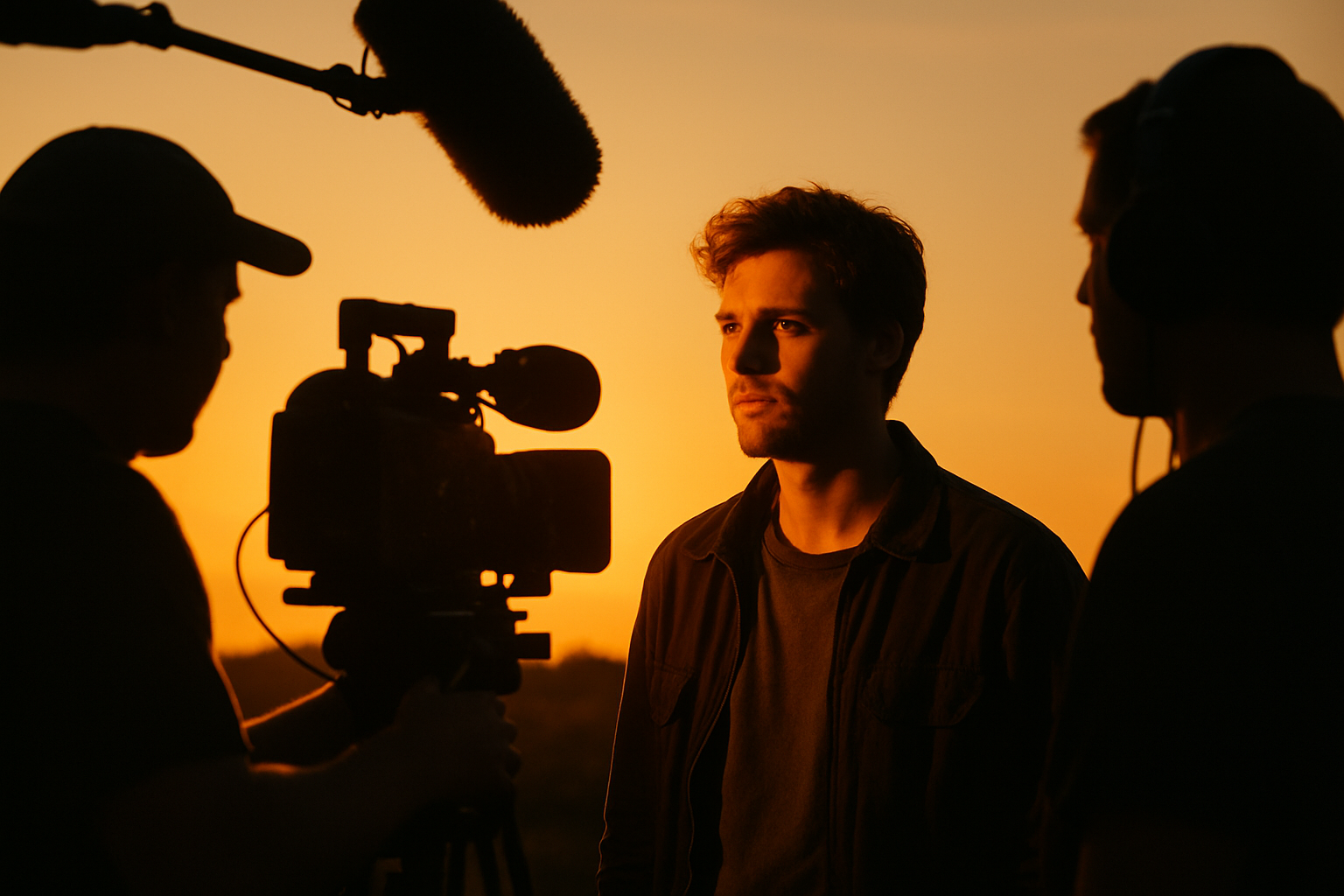
Golden hour — warm directional light that costs nothing
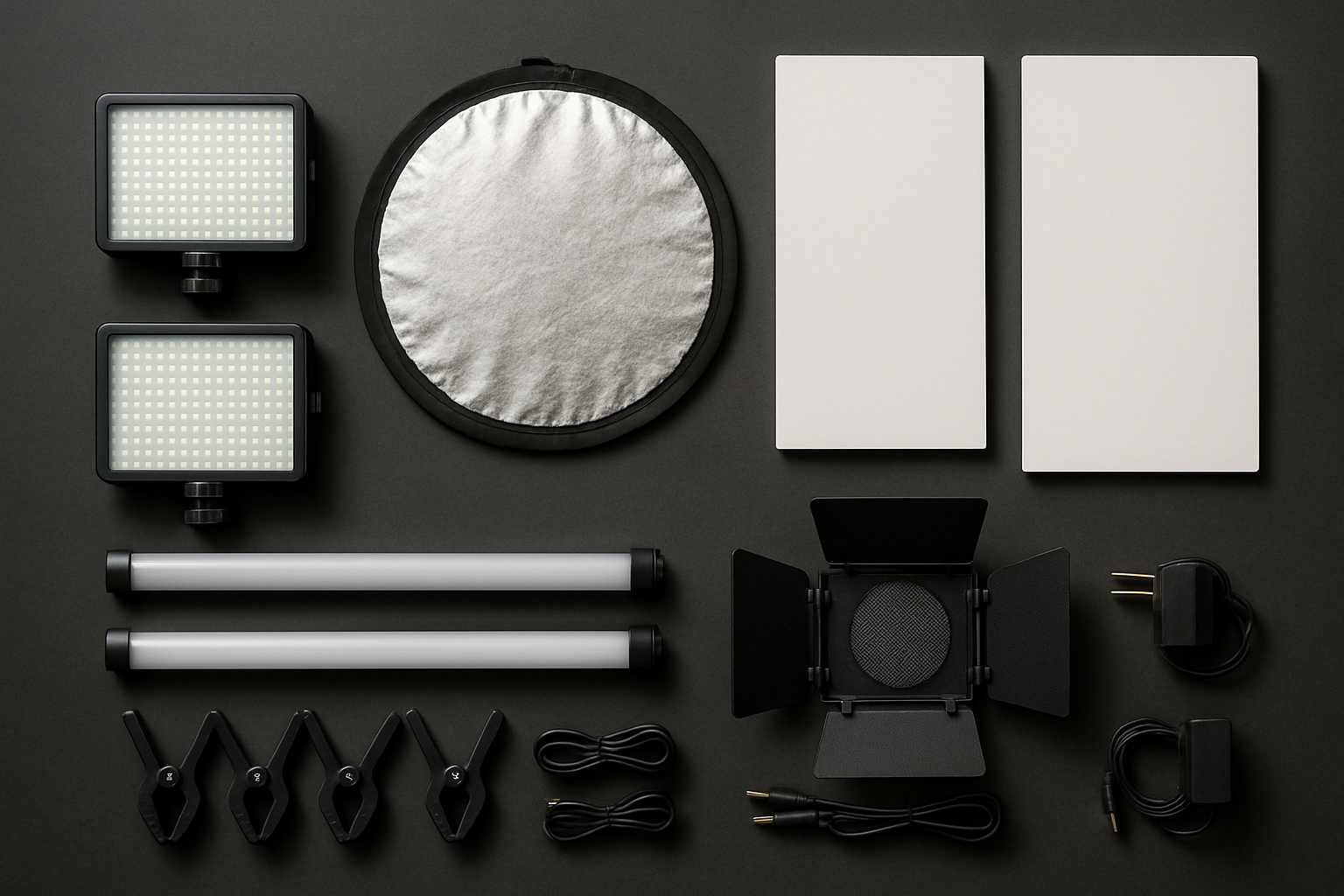
The complete indie lighting kit — under $1,000