Cinematography School
Theory, technique & visual craft for the independent filmmaker.
CHAPTER FOUR
Camera Movement & Composition
The frame is a container of meaning. Where you place things inside it, and how.
Compositional Principles
Composition is the arrangement of visual elements within the frame. Strong composition guides the viewer’s eye, establishes relationships between subjects, and communicates power, isolation, connection, or tension without a word of dialogue.
The Rule of Thirds divides the frame into a 3×3 grid. Placing subjects on the intersection points (power points) creates dynamic, visually interesting compositions. Center framing, by contrast, feels confrontational, symmetrical, and deliberate — it draws attention to itself. Both are valid; neither is a rule.
Headroom is the space between the top of a subject’s head and the top of the frame. Too much headroom makes a character feel small and lost. Too little makes them feel cramped. Standard headroom varies by shot size — close-ups have less, wide shots have more.
Lead room (or nose room) is the space in front of a subject who is looking or moving to one side. The convention is to give more space in the direction they are facing. Violating this — placing a character at the edge of the frame with no room in their direction of gaze — creates unease and tension. Use it deliberately.
Leading lines are compositional elements (roads, hallways, fences, shadows) that draw the viewer’s eye through the frame toward a subject or vanishing point. Diagonal lines create energy and movement. Horizontal lines create calm and stability. Vertical lines create barriers and formality.
Camera Angles
The vertical angle at which you position the camera relative to your subject communicates power dynamics, emotional states, and the audience’s relationship to the character.
| Angle | Position | Effect |
|---|---|---|
| Eye level | Camera at subject’s eye line | Neutral, equal, naturalistic |
| Low angle | Camera below eye line | Power, dominance, heroic or threatening |
| High angle | Camera above eye line | Vulnerability, weakness, omniscience |
| Dutch angle | Camera tilted on roll axis | Unease, disorientation, wrongness |
| Bird’s eye (top-down) | Directly overhead | God view, pattern, isolation |
| Worm’s eye | Ground level, extreme low | Extreme power, surreal |
Camera Movements
Camera movement adds a temporal dimension to composition. A static frame observes; a moving camera participates. Every movement should have a dramatic reason — to reveal, to follow, to emphasize, to disorient.
| Move | How | Dramatic Effect |
|---|---|---|
| Pan | Rotate left/right on vertical axis | Follow action, reveal space |
| Tilt | Rotate up/down on horizontal axis | Reveal height, power dynamics |
| Dolly (push in) | Camera moves toward subject | Increasing intensity, focus |
| Dolly (pull out) | Camera moves away | Isolation, revelation of space |
| Truck (lateral) | Camera moves sideways | Follow parallel action, reveal |
| Handheld | Operator holds camera | Immediacy, urgency, chaos |
| Steadicam / gimbal | Stabilized free movement | Floating, dreamlike, elegant |
| Dolly zoom | Dolly out + zoom in simultaneously | Vertigo effect, disorientation |
A skateboard with a wooden plank makes a functional dolly on smooth floors. A slider (Edelkrone, Neewer) under $150 transforms your close-up shots.
“The most powerful camera move is stillness — when every other shot has moved.”
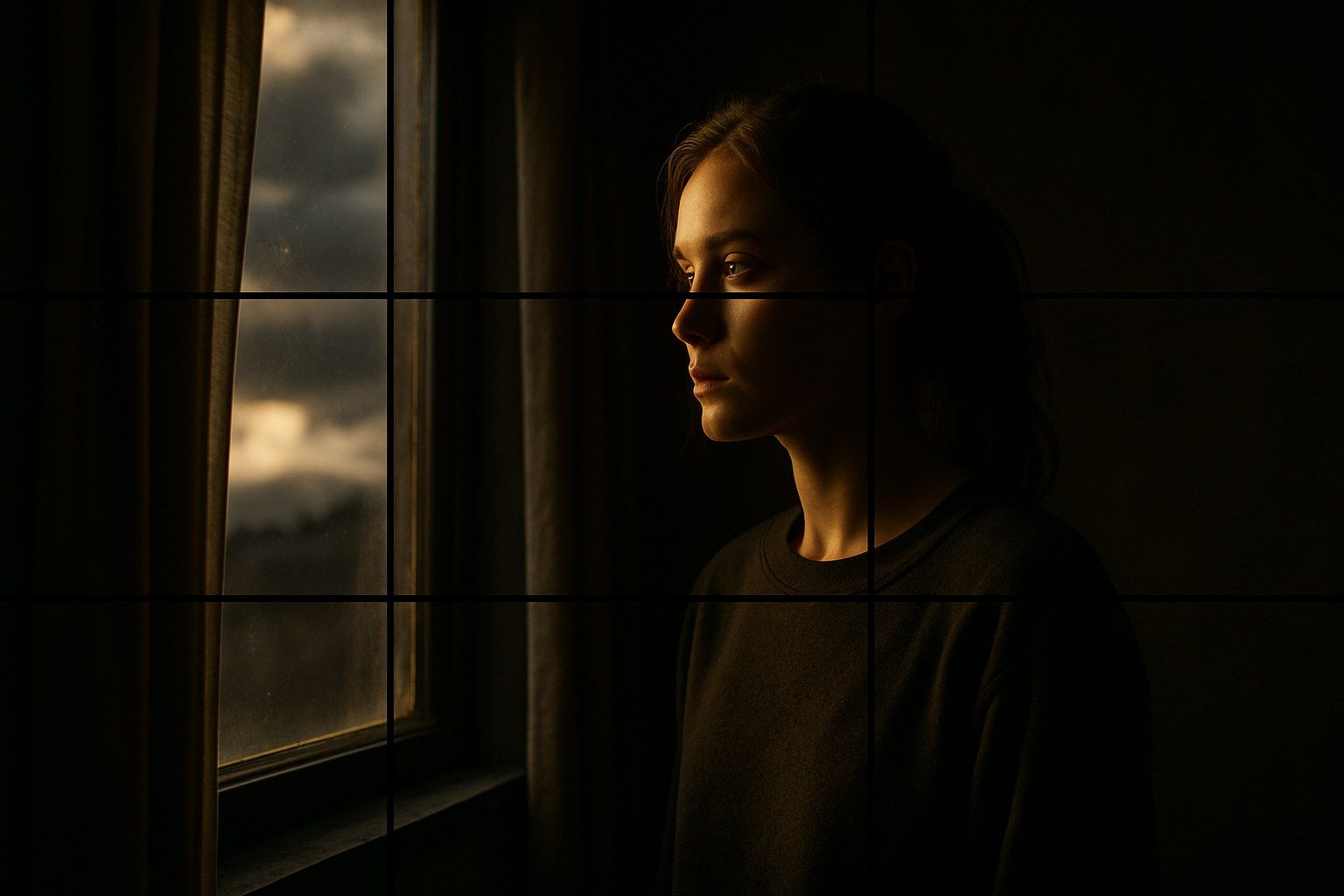
Rule of thirds — subject at the power point
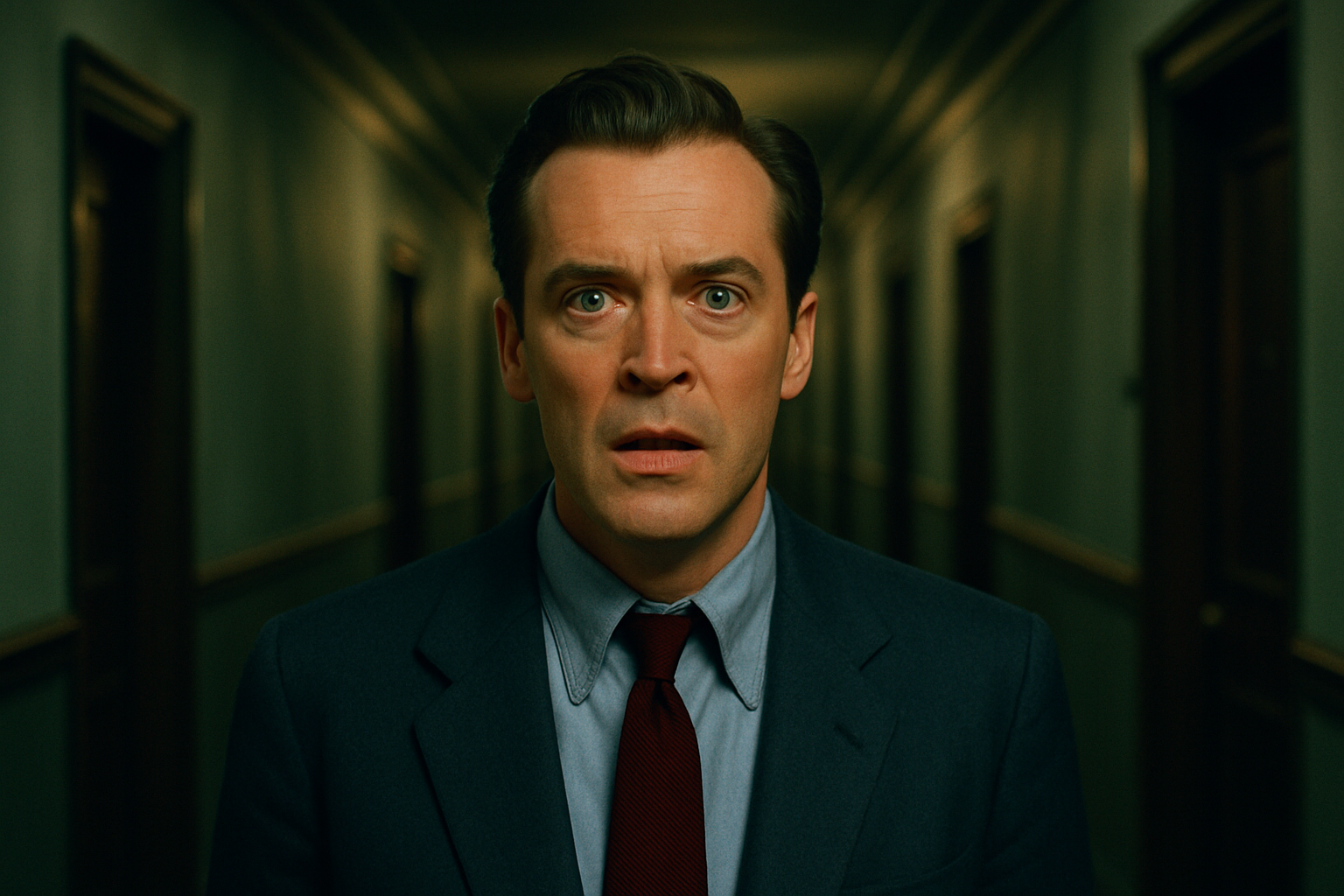
Dolly zoom — the Vertigo effect distorts perspective